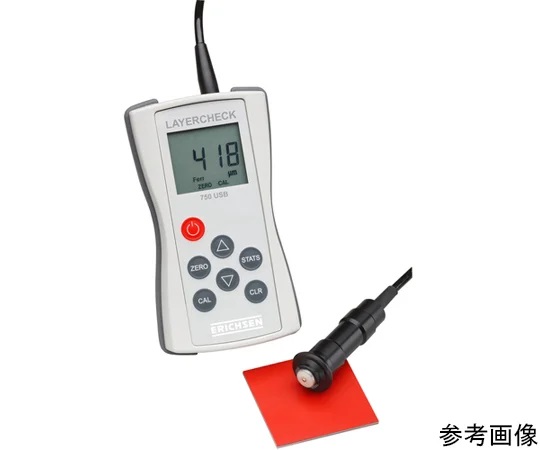
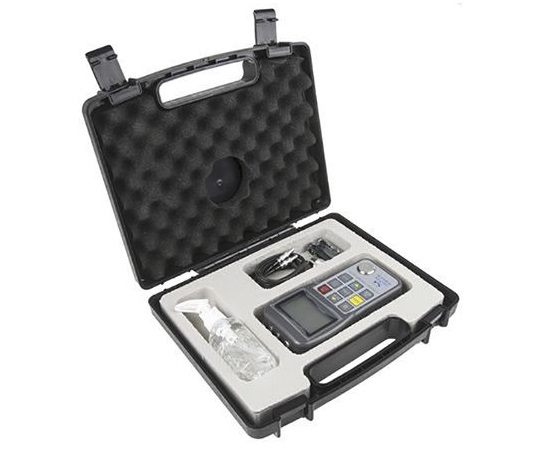
Kett Electric Laboratory LZ-990 Dual type thickness gauge Escal
| Manufaturer: | Kett Electric Laboratory |
| Model: | LZ-990 |
*The above price is Standard Price, Kindly click on Request a quote  to unlock Competitive Pricing and Delivery Dates - Check Availability. Our expert consulting team is always ready to assist you within one business day.
*Order Process: 1. Request a quote ⇒ 2. Quote via Email ⇒ 3. Proforma Invoice ⇒ 4. Payment ⇒ 5. Delivery and Invoice.
*We deliver to your doorstep under DAP terms. Customs clearance is for your account.

*You can't find the product you need, please send us the picture/specifications/model/product code and quantity you need to email: [email protected]. We will find it for you.
*Review us here: Review Now 
Description
- Low-cost, compact sensor-integrated dual coating thickness gauge
- Equipped with automatic substrate detection function
- Measurement range: 0 to 2000 μm
- Data memory for approximately 1000 points, statistical calculation function
- Measurement method: Electromagnetic and eddy current (with automatic discrimination function)
- Measurement target: Non-magnetic coating on magnetic metals, and insulating coating on non-magnetic metals
- Measurement range: 0 to 2000 μm
- Measurement accuracy: Less than 50μm +/-1μm, 50μm to less than 1000μm +/-2% 1000μm to less than 2000μm +/-3%
- Compliant standards: Electromagnetic induction: JIS K5600-1-7, JIS H8501, JIS H0401/ISO 2808, ISO 2064, ISO 1460, ISO 2178, ISO 19840/BS 3900-C5/ASTM B 499, ASTM D 7091-5, ASTM E 376 Eddy Current Method: JIS K5600-1-7, JIS H8680-2, JIS H8501/ISO 2808, ISO 2360, ISO 2064, ISO 19840/BS 3900-C5/ASTM D 7091-5, ASTM E 376
- Resolution: less than 100μm 0.1μm 100μm or more 1μm
- Display method: Digital (backlit LCD, minimum display digit 0.1μm)
- Data memory: Approximately 1000 points
- Application memory: 8 types of electromagnetic and eddy current types, total of 16 calibration curves can be stored
- Power supply: 2 x 1.5V batteries (AAA alkaline)
- Power consumption: 40mW (when backlight is off)
- Operating temperature range: 0 to 40°C
- Functions: Calibration curve memory (application memory), measurement data memory, data deletion, data output, lot classification, automatic power ON/OFF, function, clock function, upper and lower limit settings, statistical calculation, backlight function, unit setting, etc. 15 types of functions
- External output: Can be output to a PC (USB) or printer (RS-232C)
- Dimensions and weight: 82 (W) x 99.5 (D) x 32 (H) mm, approx. 160 g
- Accessories: Zero plate holder (iron base, aluminum base), standard plate (50μm, 100μm, 1000μm, approximate values, 1 each), carrying pouch, 1.5V batteries (AAA alkaline) x 2, wrist strap
- Options: Standard plate (thickness other than that included), Measuring stand LW-990, Printer (VZ-330 or VZ-380), Printer cable, USB computer cable, Transparent protective cover, Data management software: "Data logger LDL-01".
Frequently Asked Questions (FAQ):
1/ Can the LZ-990 measure on curved surfaces?
Yes, stable readings are possible on convex or concave surfaces with radii ≥ 10mm, provided the probe maintains full contact.
2/ How do I switch between µm and mil units?
Navigate to Unit Setting in the main menu and select either µm or mils. The change takes effect immediately.
3/ What causes large measurement deviations?
Deviations often stem from uncalibrated zero reference, dirty probe tip, or weak battery. Re-zero, clean the probe, and replace batteries as needed.
4/ How many calibration curves can I store?
The LZ-990 holds 16 calibration curves total: 8 for electromagnetic induction and 8 for eddy-current.
5/ Is manual substrate selection required?
No. The gauge auto-detects the substrate and switches measurement methods automatically.
6/ How do I print results on site?
Attach the optional VZ-380 printer via RS-232C; select Print from the data output menu to generate instant hardcopies.
7/ What standard coatings can it measure?
Paints, plating, anodic oxide, lacquers, resins, plastics, and other non-magnetic/insulating coatings on metallic substrates.
8/ What software is available for data logging?
The LDL-01 Data Logger Software enables CSV exports and trend analysis when connected via USB.
9/ Operation Guidelines
- Ensure the test surface is clean, dry, and free of oil or debris.
- Hold the probe perpendicular and apply gentle, consistent pressure.
- Read the thickness value on the backlit LCD; choose µm or mils via the Unit Setting menu.
- For uneven coatings, take multiple measurements and calculate the average for accurate assessment.
- Rely on the gauge’s auto-zero feature periodically to maintain precision.
10/ Maintenance & Care
- Wipe the probe tip and housing with a soft, dry cloth after use.
- Replace AAA batteries promptly when low-battery indication appears to prevent measurement drift.
- Store the gauge and accessories in the protective pouch to avoid impacts or moisture exposure.
- Schedule recalibration every 3 - 6 months or after 5000 measurements, whichever comes first, to comply with quality standards.
You may like
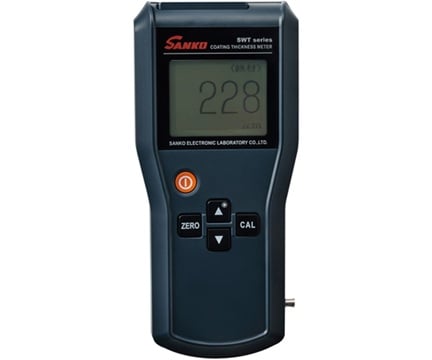
SANKO ELECTRONIC LABOLATORY SWT-NEO Electromagnetic/ Eddy Current Type Film Thickness Meter Body with USB Output

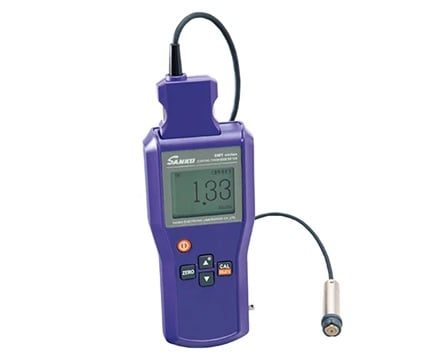
SANKO ELECTRONIC LABOLATORY SWT-9000 Electromagnetic/Eddy Current Thickness Gauge Standard Type

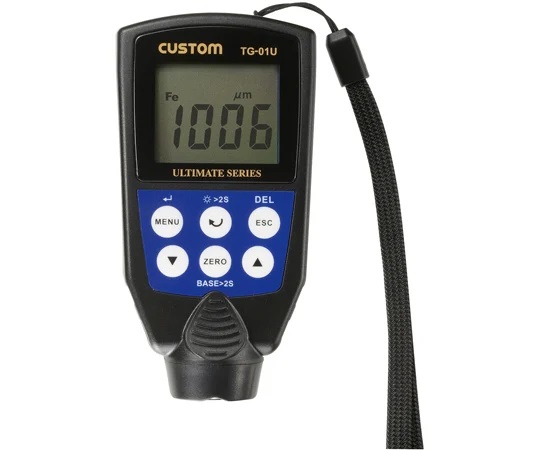

FICHER INSTRUMENTS PERMASCOPE® MP0R Pocket-type small thickness gauge with built-in probe