1. Introduction
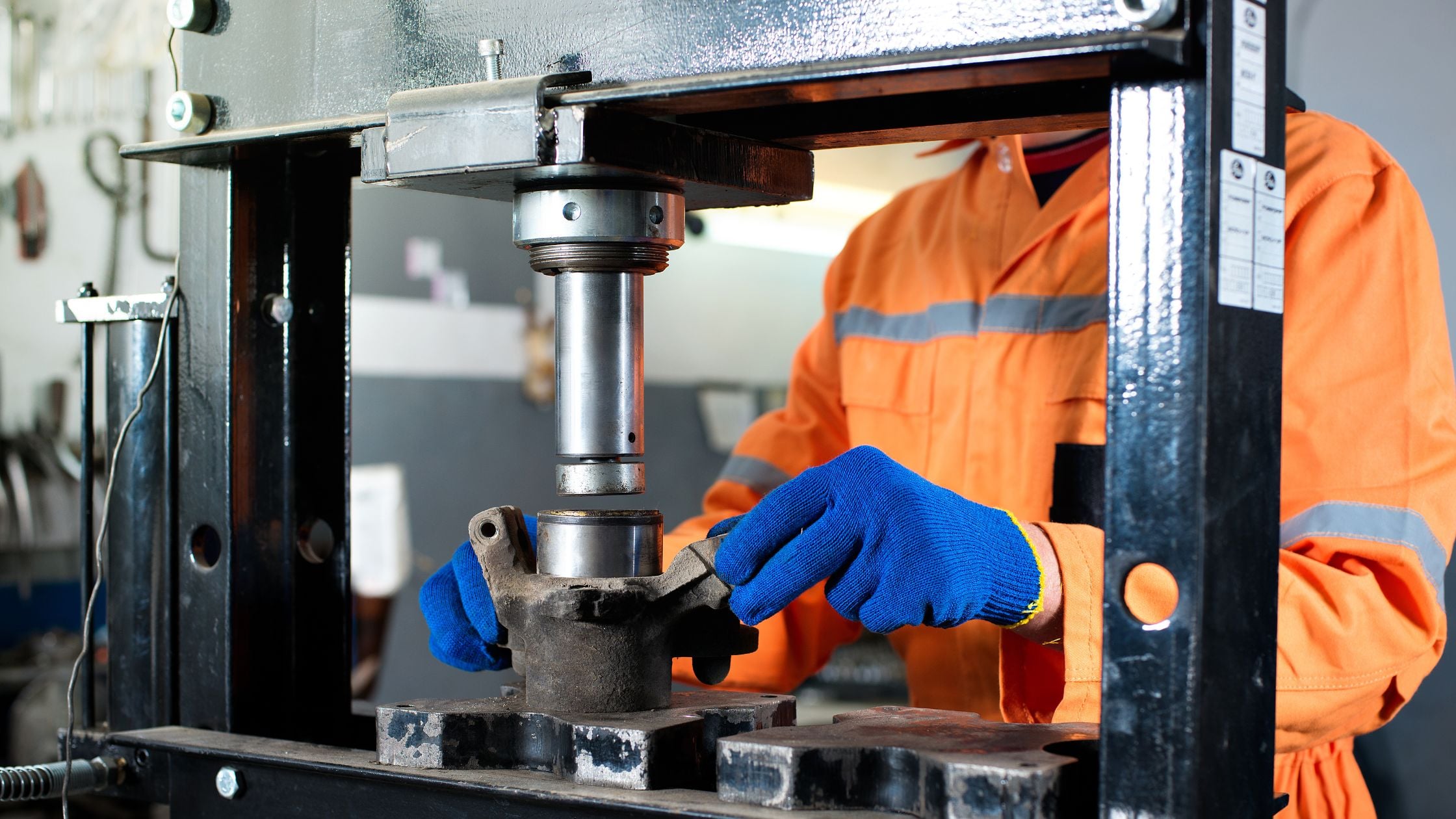
A hydraulic press is a device that converts hydraulic energy into powerful mechanical pressing force. It is widely used in industries such as mechanical engineering, metalworking, automotive component manufacturing, electronics, as well as in construction and composite material production. The "best" hydraulic press must not only provide stable pressure and high pressing force, but it also needs to feature a robust design, high durability, safety, and the capability for seamless integration with automation on production lines.
2. Operating Principle
The hydraulic press operates based on Pascal’s Principle – when pressure is applied to an incompressible fluid, that pressure is transmitted uniformly in all directions. Its operating process involves the following key steps:
-
Pressure Generation: A hydraulic pump (typically an oil pump) compresses the oil in the system, converting mechanical energy from the motor into hydraulic energy.
-
Force Transmission: The oil pressure is conveyed through conduits to the hydraulic cylinders.
-
Conversion to Pressing Force: A hydraulic cylinder with a large piston area receives the pressure and produces an extremely powerful pressing force along the direction determined by the press frame.
This direct and precise conversion from hydraulic pressure to mechanical force allows the press to achieve high efficiency while optimizing energy consumption.
3. Construction and Main Components
A modern hydraulic press is typically constructed from the following key components:
-
Frame:
-
Function: Acts as the main load-bearing part of the machine, ensuring stability and even distribution of the pressing force.
-
Technical Requirements: Manufactured from high-grade, load-resistant steel and designed with a robust structure to minimize vibrations and structural deformation during pressing.
-
-
Hydraulic Cylinder:
-
Components: Comprises the cylinder tube, piston, rod, and seals.
-
Operating Principle: The piston moves within the cylinder tube under the influence of oil pressure, generating a direct force applied to the mold or workpiece.
-
Features: The precision and smoothness of the piston surface, along with the quality of the seals, are critical to minimizing leakage and wear.
-
-
Hydraulic Pump:
-
Control System & Valves:
-
Control: Typically integrates a PLC, pressure sensors, and position sensors for monitoring the process and adjusting operating parameters as needed.
-
Control Valves: Pressure reducing, directional control, and safety valves are used to ensure that the pressure always remains within acceptable limits.
-
-
Human Machine Interface (HMI):
-
Function: Displays operating parameters, allows adjustment of speed and pressing force, and monitors the overall system status.
-
Features: Intuitive, user-friendly interface with data storage capability for calibration and quality inspection purposes.
-
-
Piping, Filters, and Cooling System:
-
Piping: Ensures sealed, high-pressure conduits, thereby reducing overheating and pressure loss.
-
Oil Filters: Keep the hydraulic oil clean, limiting dust and contaminants that may damage components.
-
Cooling System: Maintains a stable temperature for the hydraulic oil to prevent overheating during extended operations.
-
4. Technical Specifications and Performance
The best hydraulic press must meet stringent technical specifications, including:
| Parameter | Unit | Description / Technical Requirements |
|---|---|---|
| Maximum Pressing Force | Tons (t) | Suitable for applications ranging from a few tons up to hundreds of tons for intensive operations |
| Operating Pressure | MPa | Typically between 20 MPa and 35 MPa, adjustable as required |
| Pump Flow Rate | L/min | Ensures sufficient oil supply for the cylinder, ranging from 30 to 200 L/min depending on machine capacity |
| Pressing Speed | mm/s | The speed at which the piston moves, adjustable to ensure high machining accuracy |
| Press Bed Size | mm | Must meet the size requirements of the mold and the specific workpiece |
| Machine Weight | kg | Depends on the frame and overall design, ensuring stability during operation |
Additionally, other parameters such as energy consumption, cooling system efficiency, and the lifespan of components are important factors when assessing the overall performance and quality of the hydraulic press.
5. Types of Hydraulic Presses
Hydraulic presses can be classified based on various criteria:
-
By Design:
-
Bench Hydraulic Press: Primarily used for detailed work, bending, and small mold pressing applications.
-
Floor (Vertical) Hydraulic Press: Featuring a large frame that delivers exceptional pressing force, commonly used in heavy industrial production lines.
-
Portable/Handheld Hydraulic Press: Compact and easily movable, suitable for repair work and on-site processing.
-
-
By Degree of Automation:
-
Semi-Automatic Hydraulic Press: Capable of adjusting basic parameters via a control panel, ideal for moderate production volumes.
-
Fully Automatic (CNC) Hydraulic Press: Integrated with microprocessor-based control systems, allowing the execution of complex machining processes with high precision and time efficiency.
-
-
By Application:
-
Hydraulic Press for Metalworking: Prioritizes precision and high load-bearing capacity.
-
Hydraulic Press for Construction and Composite Material Production: Focuses on forming large molds, achieving uniform pressure distribution, and conserving energy.
-
6. Advantages of an Optimized Hydraulic Press
Hydraulic presses are considered indispensable in modern manufacturing due to their clear advantages:
-
Stable Pressing Force: The hydraulic system provides a continuous, smooth, and easily adjustable pressing force tailored to specific needs.
-
High Efficiency and Energy Savings: Advancements in pump technology and conduit design help reduce energy losses and enhance overall work efficiency.
-
Precision and Repeatability: The fluid-based transmission of pressure minimizes errors compared to conventional mechanical systems.
-
Flexibility and Ease of Automation Integration: Modern hydraulic presses come with smart control interfaces that integrate seamlessly with automated production lines.
-
Advanced Safety Systems: Equipped with sensors, safety valves, and overload protection systems to ensure safe operation for both the user and the equipment.
7. Factors Determining Quality and Performance
To evaluate and select the best hydraulic press, users must pay attention to the following key factors:
-
Frame Design and Construction Materials: The robustness of the frame and the quality of the materials (high-grade steel, wear-resistant alloys) determine the stability and service life of the equipment.
-
Accuracy of the Hydraulic System: The cylinders, seals, and piping must be engineered to minimize leakage and pressure fluctuations, ensuring uniform force transmission.
-
Pump and Control System: Modern pump technology increases flow and maintains stable pressure; additionally, an intelligent control system (PLC, pressure sensors, HMI) enables rapid monitoring and adjustment of operating parameters.
-
Quality Standards: Products that meet international certifications (ISO, CE, etc.) guarantee performance, durability, and safety during operation.
8. Operating and Maintenance Procedures
8.1 Operating Procedures
-
Start-Up: – Check the hydraulic oil level to ensure there are no leaks. – Start the engine and pump, and monitor the initial pressure through the control system.
-
Press Operation: – Adjust the piston movement speed via the control unit. – Monitor parameters such as pressing force, oil pressure, and speed to ensure they remain within allowable limits.
-
Shutdown: – Turn off the machine following the proper sequence, release the pressure, and inspect the system.
8.2 Routine Maintenance
-
Hydraulic Oil Maintenance: – Replace the oil and filters at regular intervals to ensure the oil remains clean and performs at its best.
-
Inspection of Moving Parts: – Clean and lubricate friction points, and check the condition of seals and cylinders.
-
Control System Calibration: – Periodically inspect and calibrate sensors and control valves to maintain accuracy.
-
Frame and Joint Inspection: – Ensure that there are no signs of wear, deformation, or cracking that could affect the operation.
9. Practical Applications
Hydraulic presses are employed in a wide range of industrial applications due to their ability to generate large and stable pressing forces:
-
Metalworking: – Used for mold pressing, bending, stamping, plate rolling, and shaping mechanical components.
-
Automotive and Electronic Component Manufacturing: – Fabricates precision parts with high repeatability, ensuring adherence to standard specifications.
-
Construction and Mold Fabrication: – Used for concrete pressing, shaping large materials, and creating simultaneous pressing zones.
-
Composite and Plastic Material Manufacturing: – Employed for forming and compressing thin materials to ensure quality and uniformity.
10. New Technology Trends
In order to meet modern production demands, hydraulic press manufacturers are investing in research and development with the following trends:
-
Integration of IoT and Remote Monitoring: – Intelligent sensor systems and data management software enable real-time machine performance monitoring and early fault detection.
-
Automated Control (CNC): – Integrating digital control facilitates the execution of complex pressing processes with high precision and speed.
-
Sustainable and Energy-Saving Design: – New pump technologies, improved piping, and enhanced cooling systems help reduce energy consumption and minimize losses.
-
Advanced Safety Systems: – Development of overload protection sensors and automatic shutdown systems in case of anomalies, along with incorporating international safety standards such as CE and ATEX.
11. Conclusion
The best hydraulic press is a synthesis of modern technology, robust design, and stable operation that meets the stringent demands of industrial production. Selecting the appropriate press requires careful consideration of technical specifications, quality standards, and specific applications. When operated and maintained correctly, a hydraulic press not only enhances production efficiency but also contributes to improved product quality, reduced operating costs, and ensures worker safety.
In the context of modern industry, the trend toward integrating automation and smart monitoring systems will be key to the further development of hydraulic presses and their ability to meet diverse production needs. Manufacturers are continually researching and innovating to offer the optimal solution for their customers, ensuring that their products remain durable, efficient, and environmentally friendly.
QTE Technologies is your one-stop destination for all types of hydraulic presses. We are an international MRO distributor serving B2B customers in over 180 countries. You may also contact us by telephone, WhatsApp, or email at any time with our 24×7 service. Discover what our valued customers say about our services on our dedicated review page.
Post Author By QTE Technologies Editorial Staff (with a solid background in both technical and creative writing - accumulated 15+ years of experience).